
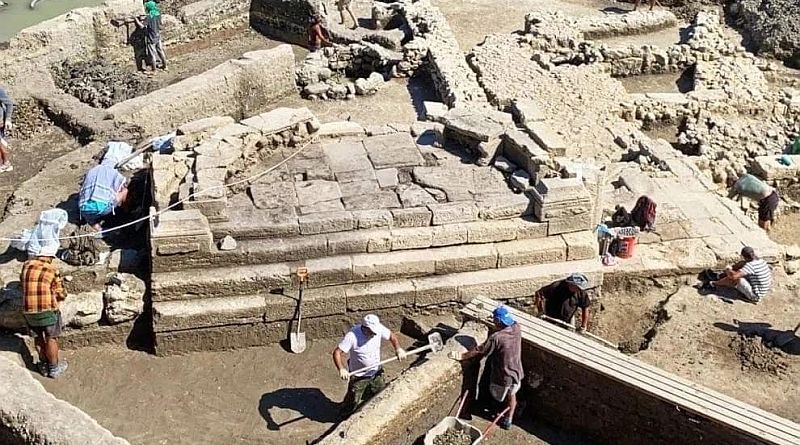
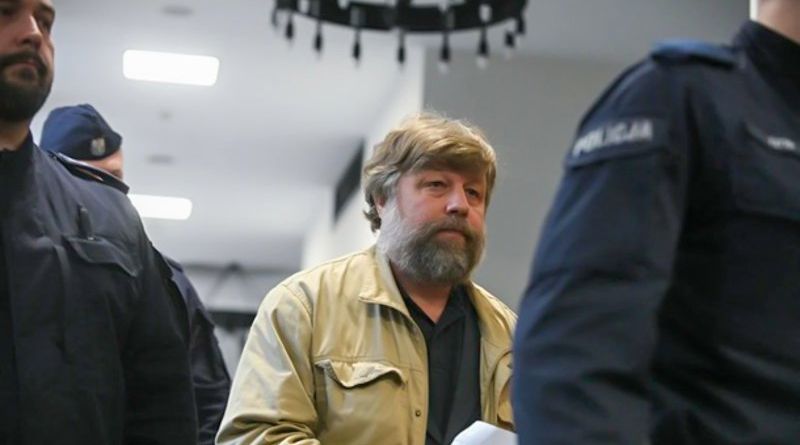
More than a month has passed since the Internal Security Agency of Poland detained the head of the Archaeology Sector of the Northern Black Sea in the Hermitage, Oleksandr Butyagin, at the request of the Ukrainian side. This happened during his lecture tour in Europe.
In 2024, Ukrainian law enforcement agencies issued a notice of suspicion against Butyagin in absentia under Article 298 of the Criminal Code for illegal excavations in the occupied Crimea, in the ancient city of Myrmekion. The investigation considers that this led to partial destruction of a cultural monument of national significance, estimating damages at over 200 million UAH.
After the detention, Ukraine sent a request for extradition of the Russian archaeologist, and on January 15, the Polish court considered the possibility of his transfer. However, due to a motion from the defense for the judge’s withdrawal, the hearing was postponed.
Oleksandr Butyagin admits that since 2014 he has not obtained permissions from Ukraine for research in Crimea but denies the allegations of destroying an archaeological site.
— For Russian archaeologists, it’s quite natural to consider this theirs. “Crimea is ours” is ingrained in them because they have always been there, says Denys Yashny, an expert at the Crimean Institute for Strategic Studies. — At the same time, I think they fully understand that by working in Crimea, they are violating Ukrainian law. But in their reality, orientation towards this is not even embedded, so they did not expect Ukraine to pursue them.
If Oleksandr Butyagin is indeed extradited, it will be a good case, believes Oksana Lifanthi, a senior researcher at the Treasury of the National Museum of History of Ukraine.
— I think it will affect their sense of impunity and confidence that they are doing good for the local population. So next time, they will think ten times before agreeing to excavations.
And it’s not only about the occupied Crimea.
Without Crimea and Home
In 2014, Serhiy Telyzhenko lost both his home and research site. He lived in Luhansk and worked at the Crimean branch of the Institute of Archaeology of Ukraine, studying mountainous Crimea. Specializing in the Neolithic and Eneolithic periods, Serhiy spent half a year in archaeological expeditions on the peninsula and several months in Luhansk region.
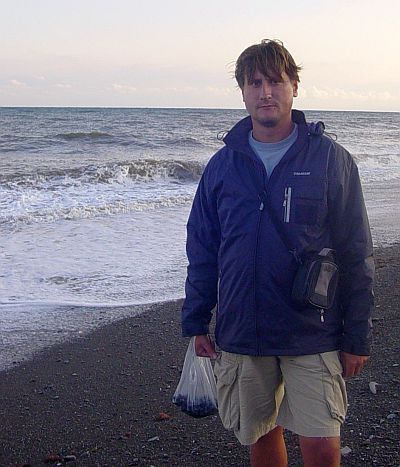
He also lost his collections. Thousands of artifacts discovered during excavations were either left in the Luhansk Regional Museum of Local History and the Luhansk National University named after Taras Shevchenko or in the Alushta Historical and Local Lore Museum and the Bakhchisaray State Historical and Cultural Preserve.
He managed to remove only a tiny part of the materials, and that too by fortunate coincidence.
— These are all Stone Age finds, that’s how they look, — says Serhiy, showing a bag of flint flakes once used as tools.
— Beautiful, but all stone, — he laughs. — Once in 2013, when I brought what I excavated to the Alushta museum for storage after an expedition, they said: “Why do you always give us this stone, take something back.” And I took out a collection that I had been digging at a height of 998 meters under Chatyr-Dag.
Now it is at the Institute of Archaeology in Kyiv. By chance, a box of medieval era artifacts from Cape Soter, where Serhiy also conducted research, ended up in Kyiv as well.
— In the summer of 2014, I was supposed to go on an expedition to Volyn and took part of the materials with me because I was just processing them. Now they are in the National Museum of History of Ukraine. But the collection was much larger; we took almost a full truck of artifacts from the excavations. And they all remained in Crimea. The box is a drop in the ocean. And everything that was stored in Luhansk, I lost completely.
Meanwhile, Oleksandr Butyagin continued excavations after the occupation of Crimea as if nothing had happened. For example, in 2022, the Myrmeki Archaeological Expedition discovered an important treasure — 30 gold coins bearing the name of Alexander the Great and his brother Philip III.
Systematic Crime
From 2014 to November 2025, the Regional Human Rights Center recorded over 1700 permits issued by the Russian authorities for excavations in Crimea.
Expeditions from the Institute of Archaeology RAS, Institute of History of Material Culture, State Hermitage, Institute of Archaeology and Ethnography of the Siberian Branch of RAS, Russian Research Institute of Cultural and Natural Heritage named after D.S. Likhachev, the Center for Restoration and Preservation of Monuments, the Center for High Technology and Marine Archaeology “Arkhaytek” established in occupied Sevastopol, and others worked here.
The Russians actively excavated in Crimea before 2014, obtaining permits through Ukrainian archaeologists. Then, essentially without taking a pause, they continued with old expeditions and seized those previously led by Ukrainians, explains Oksana Lifantii. According to her, there was a very small percentage of Russian archaeologists who did not engage in this. Even those who had never excavated in Crimea before 2014 suddenly began their research.
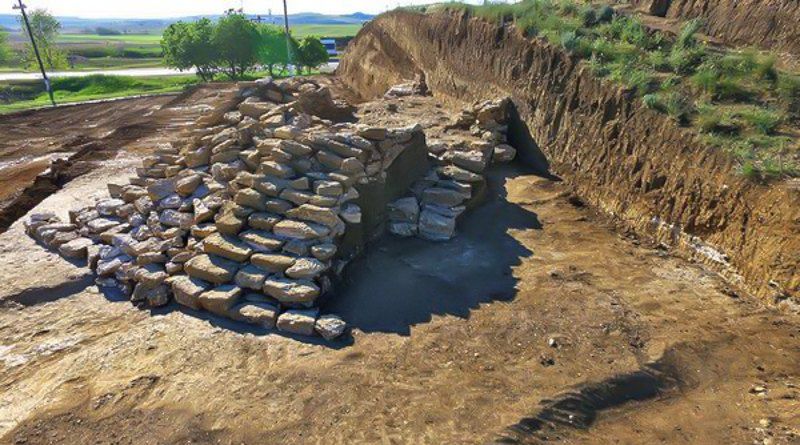
For some time, when it was possible, Serhiy Telizhenko monitored the fate of the sites he studied. Some sites were not yet reached by the Russians, neither archaeologists nor developers. For example, some sites near Alushta. This seems like a miracle, considering the construction pace in the Alushta district. Moreover, it is unknown whether they actually conduct land inspections before works as they did before.
— You see, mostly what happens in Crimea are so-called rescue excavations tied to large constructions. Although for us they would be rescue operations, for the occupiers they are destructive, — says the scientist.
The federal “Tavrida” highway, 250 km from Kerch to Sevastopol, began construction in 2017. At that time, a specially created Crimean New Construction Archaeological Expedition (Крымская новостроечная археологическая экспедиция) was working on the project. Many hands had to be involved in the work — scientists from numerous Russian institutes, Crimean institutions, and even representatives of commercial archaeological organizations from the peninsula and the Krasnodar region contributed.
Over 90 archaeological sites from the Mesolithic era to the 19th century were found on the plot. The total excavation area covered more than 90 hectares. This scale of work was unprecedented in Crimea and was carried out in such tight timeframes for the first time. The archaeologists involved recounted how the road construction machinery was “practically breathing down their necks,” and how they had to research sites at night “in the headlights of excavators and tractors.” Of course, this involved heavy machinery, essential for quickly excavating thousands of square meters.
While one site was being excavated, another was being destroyed. Ironically, 20 mounds and 450 m² of the Artesian necropolis with ancient tombs ended up in the sand quarry zone from which Russian firms were spontaneously extracting sand for the road. Their fellow archaeologists also complained about this.
During the construction of “Tavrida,” the necropolis Frontove-3 from Roman times was discovered. 332 burial structures were studied only for one season. Russians removed 20,000 findings from there, including 15,000 beads. There were also glassware, ceramic vessels, metal fibulas, pendants, bracelets, and swords found in the warriors’ graves.
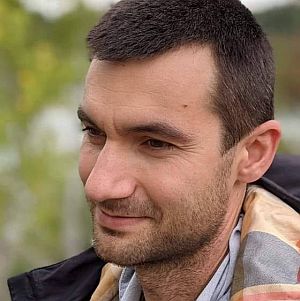
— They practically excavated the cemetery in half a year, and they are still publishing materials on it, — says Denis Yashnyi. — But the problem is that these were ultra-fast rates. For comparison: an expedition in Chervonyi Mayak, Kherson region, would uncover three to five burials in a field season. And here is the next question: do they extract and study everything? One way or another, we must understand: what the Russians excavated, we lost.
Therefore, we will not learn about some part of the past.
The situation was similar with the construction of the “New Chersonesus” temple-museum complex, which the Russians built in a year and eight months right next to the ancient settlement of “Chersonesus Taurica,” as if eager to mark the territory, precisely the place where “after the baptism of Prince Vladimir, the strengthening of the centralized Russian state began,” as Vladimir Putin once said.
— Such large-scale construction, involving huge funds, is used to create the myth that Russians came and quickly and pompously rebuilt everything. This accelerates the integration of territories into their cultural environment, transmitting the message that it all belonged to them anyway and that Ukraine never existed here, — says Yaroslav Sementsova, an analyst from the Regional Human Rights Center.
For the sake of “New Chersonesus,” they excavated 22 hectares, destroying many remnants of antiquity from different times.
— It was studied very quickly for such a landmark. This is not even at the level of new construction archaeology and is a gross violation of research methodology, even though they presented it as scientific, — says Oksana Lifantiy. — They also registered it under Russian legislation as a newly discovered site with a 200-year history of research. That’s just ridiculous.
The Russians themselves claimed that they found more than six million artifacts during the excavations. The story gained significant publicity in Ukraine. However, there are many similar locations.
— In general, it’s millions and millions of items. What is happening cannot be compared to any other historical example. Perhaps only with the wars in the Near and Middle East. That’s when monuments could be so severely damaged. But there were illegal excavations by local residents trading artifacts on the black market. There are simply no examples of using supposedly legal methods of archaeology and such large-scale studies of cultural layers. This is an unprecedented and systematic crime by Russia that is actively progressing, — the scientist states.
They are ready
News that the first permits for Russian-style excavations began to be issued for the occupied parts of the Donetsk, Luhansk, Kherson, and Zaporizhzhia regions appeared last year. According to the Regional Human Rights Center, as of 2025, there were 53 open letters received.
But it seems that for now, it is mainly not about academic work — the main focus is on identifying archaeological objects in construction areas.
At the All-Russian Archaeologists’ Congress held last fall, Donetsk archaeologist Oleksandr Kolesnyk, now a senior researcher at the Institute of History and Material Heritage of the Russian Academy of Sciences, stated that the so-called Donetsk authorities in 2024 received nearly fifty applications for assessments in construction zones, including from the Crimean Regional Center for Archaeological Research, the Institute of the History of Material Culture of the RAS, the private company “Belgorod Archaeological Expertise,” the Research Center “Heritage of Donbas,” which he founded.
— So, some work is being done and money is being made. In Donetsk, Zaporizhzhia, and Kherson regions, Crimean (and not only) archaeologists are actively grazing, taking open letters and working on land allocations mainly for infrastructure: railways, highways. There is no talk of science, — says Serhiy Telizhenko.
For example, since 2023, there have been regular reports of excavations in the “Stone Grave” reserve in the Zaporizhzhia region. It is essentially a collection of sandstone formations, in whose grottoes and caves one can see drawings (petroglyphs) left by people from the Paleolithic to the Middle Ages. But to date, there is no confirmation that such work was conducted.
— From what has definitely been done, a new location “Scythian Camp” was set up. Paths were laid, some tents were erected, — says Yaroslava Sementsova. — We documented these changes in the landscape, and archaeological surveys should have been conducted for this. Because when you do something directly on a monument, even laying a path, you can still encounter archaeological material. If such work was done, it could be considered illegal. For now, these are not systematic full-fledged excavations, but such intentions are being voiced by representatives of the occupation authorities.
In the Luhansk region, large-scale infrastructure projects are not widely heard of, says Serhiy Telizhenko. So there is no work for archaeological companies, except for some small tasks. At least the monitoring of so-called ministry of culture and local museums’ pages, which the scientist conducts, does not suggest that anything grand is happening.
— The only large project I can remember is a livestock enterprise south of Luhansk. As a result of its construction, the Luhansk Regional Museum of Local Lore researched several burial mounds, although the deputy director of the museum said there are more than a dozen. From this, it can be concluded that the other mounds were most likely simply destroyed, — he explains.
At the beginning of last year, the director of the Institute of Archaeology of the Russian Academy of Sciences, Nikolai Makarov, stated that the time for new studies of the “Novorossiya lands” has not yet come: “But we are ready for these works.” After all, as local media once wrote, Russian archaeologists already have experience in “taking over affairs.” However, the experience of Crimea, which they hinted at, does not really extrapolate well to the newly occupied territories. For several reasons.
Complex Integration
If we talk about scientific research, while military actions continue, there may not be such large-scale excavations in Luhansk, Donetsk, Kherson, Zaporizhzhia regions, suggests Serhiy Telizhenko. This is the first factor.
Secondly, Russia has faced staffing problems here. As the occupation of Kherson showed, not many specialists wished to cooperate with the Russians, says Denys Yashny. Even looking at Donetsk and Luhansk in 2014, many people left there as well. Yes, the Russian Federation launched federal programs to encourage young people to move to the newly occupied territories, but they are not very popular.
In contrast, in Crimea, most of the museum staff transitioned to newly established occupation institutions — museum establishments, reserves, etc. And local archaeologists have been oriented towards Moscow for decades.
— Unfortunately, after 1991, the Ukrainian state paid little attention to building healthy relations with Crimea. This was evident in the cultural heritage sector. For example, the Republican Committee for the Protection of Cultural Heritage did not transfer copies of registration documents for monuments to the Ministry of Culture. Although it wasn’t required by law, the ministry could have shown more interest. Moreover, there were situations where the Crimean branch of the Institute of Archaeology of the National Academy of Sciences of Ukraine had more complete copies of archaeological reports than the capital, — says Denys Yashny. — Pavlo Kazarin described it well: “Crimea is a reserve of the Soviet.” The cultural sphere was a reserve of the Soviet within that reserve. I can’t recall any Crimean museums attempting to foster museum inclusion in terms of Crimea’s involvement in Ukrainian processes. This is what greatly distinguishes newly occupied territories. There was a foundation in Crimea that allowed it to be quickly seized, integrated, and decentralized.
Even the situation in the Donetsk and Luhansk regions, occupied in 2014, has its nuances. On one hand, Russia officially did not recognize their capture. Before the referendum, the so-called LNR and DNR used their so-called legislation in the cultural sphere, which largely remained incorporated into Ukrainian law. On the other hand, despite everything, scientific and cultural ties with the Russian Federation were less established here. As a result, their integration into the cultural heritage sphere is quite complex, unlike Crimea.
A common issue for all territories without exception is what is termed collateral losses.
Use, Destroy, Erase
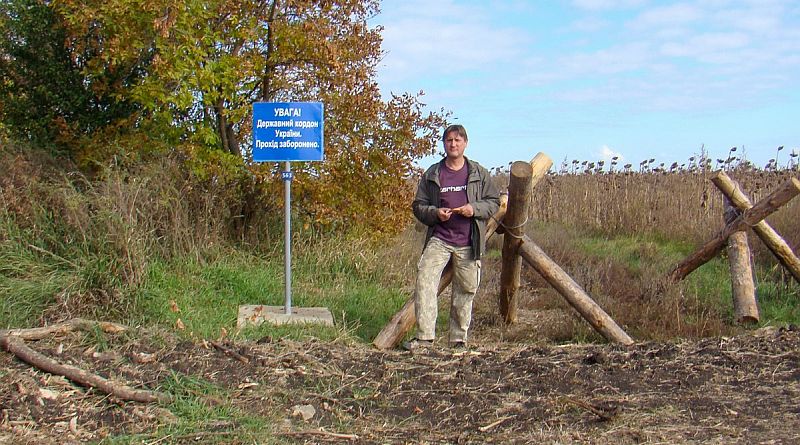
Since 2014, Sergiy Telizhenko worked in Volyn, lived in Lutsk, but did not leave Luhansk region. He even considered getting a job at the regional ethnographic museum, which was re-registered in Starobilsk, but there was no space available. However, two years later he returned to the Luhansk region and, in cooperation with the Helsinki Committee for Human Rights, participated in a monitoring expedition along the front line to determine the state of archaeological heritage amid the war.
He then visited Stanytsia Luhanska, Shchastia, Novoaidarske, where he saw damaged mounds used for military purposes, and a multi-layered settlement near the village of Borivske on the banks of the Siverskyi Donets, which had been studied. Similar expeditions continued until 2021.
— If we extrapolate that situation to the present, the same problems exist now, only significantly more extensive. Trenches, ditches, craters, so much, — says Serhiy Telizhenko.
He shows the Surovikin lines in the Luhansk region on a map with fortifications created by the osint Bradly Afrcik.
— Here’s the line, here, here. These are trenches, about two meters wide, maybe more. If, for example, you take a 19th-century map marked with burial mounds and overlay it on a modern satellite image, you can easily calculate which of them were damaged or destroyed. For instance, Bila Hora near Toshkivka, severely damaged back in 2015. And here are the mounds, one or two. They were shelled.
Nearby is a Mesolithic site that Serhiy discovered in 2015 thanks to those same explosions, as the flint was brought to the surface. Several mounds were turned into caponiers.
— Many such examples can be given if you carefully look at maps and if you know the area well. As a Luhansk resident, I can mentally picture the degree of damage. It’s enormous, — says the archaeologist.
The mounds are themselves mounds, and like any elevation, they were used to set up either an observation post or positions for infantry or even artillery. According to the Crimean Institute for Strategic Studies, out of more than 1,100 cultural heritage sites damaged from 2014 to 2022, about three hundred are mounds in the Donetsk and Luhansk regions. About a hundred more were damaged in the Kherson region in 2022. Practically all mounds on the right bank of Kherson, taller than three meters, were used by Russian military in one way or another. The year before last, while researching the Zaporizhzhia region, the Crimean Institute calculated that 60 mounds were caught under the Surovikin line.
The organization also records the construction of fortifications in Crimea since 2022. Intensive construction began after Ukrainian forces sank the cruiser “Moskva” and conducted several raids on the Crimean coast. Currently, the line of infantry fortifications and caponiers for equipment stretches from Or-Kapi, Perekop to Akhtiar, Sevastopol, where Greek settlements once were. No archaeological surveys are conducted on objects in the zone of interest of Russian troops.
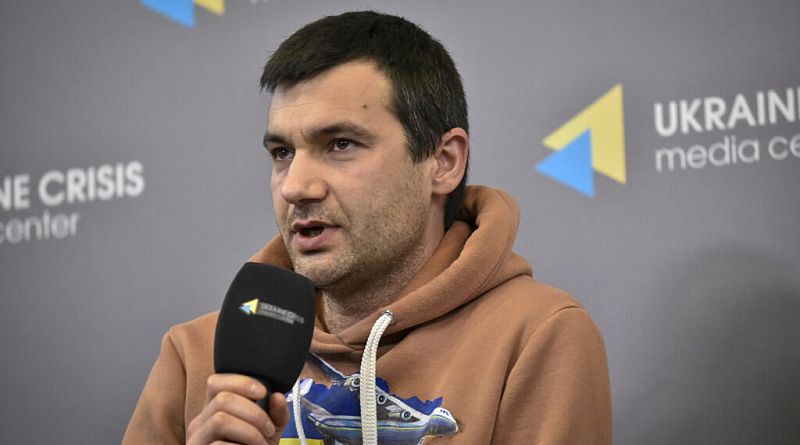
— From this, we can understand two basic things, — says Denys Yashnyi. — The heritage that ended up under occupation is either destroyed by the Russians or used for their own grand narrative, which has remained unchanged for centuries: Orthodoxy, autocracy, nationality. What doesn’t fit this is simply erased.
After the occupation of Crimea, Russia began the “restoration” of the Khan’s Palace in Bakhchisarai, which led to irreparable losses. The only preserved example of Crimean Tatar palace architecture, the Great Khan Mosque, suffered perhaps the greatest damage. The authentic carved walnut ceiling was removed, the leather ceiling inlaid with gold was destroyed, and the old wooden chandelier disappeared.
Vanishing Artifacts
Where the artifacts excavated by the Russians (or stolen museum collections) eventually end up, we can only know when they tell us themselves, when they publish articles or exhibit at exhibitions, says Denys Yashnyi. For example, it’s still unknown exactly where the collection of the Kherson Regional Museum is kept.
Regarding the materials found in Crimea, the Russians claim they supposedly remain in Crimea.
— But can they be trusted? No. I would phrase the question differently. Do they take everything out? No. Do they take out the most iconic items? They take out the items they deem necessary to remove, according to the researchers excavating the sites. A classic example is the excavations in Old Crimea in 2016, when a ceramic water pipeline was found. Its parts directly entered the Hermitage collection.
But most often, the circulation of artifacts from Crimea occurs either through restoration works, where items are exported to Moscow or St. Petersburg and can remain there indefinitely, or through the organization of temporary exhibitions, says Yaroslava Sementsova.
One of the latest cases is the exhibition in Nizhny Novgorod, dedicated to the 80th anniversary of the Panticapaeum expedition “Panticapaeum. From Past to Future,” which features a collection of various items from the Pushkin Museum, the Hermitage, as well as the Kerch Museum.
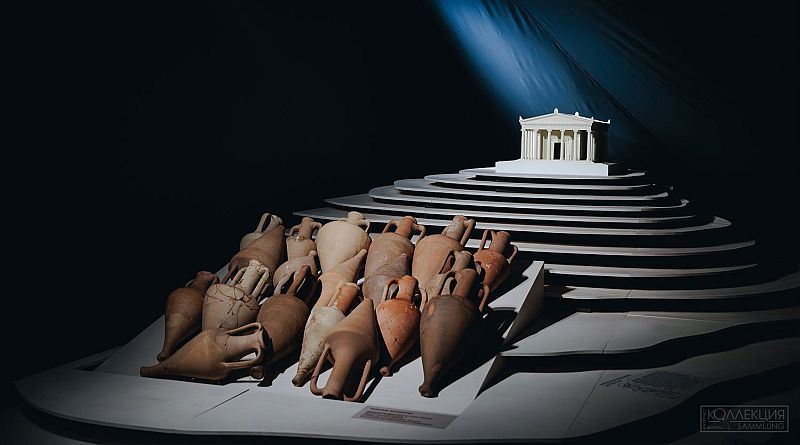
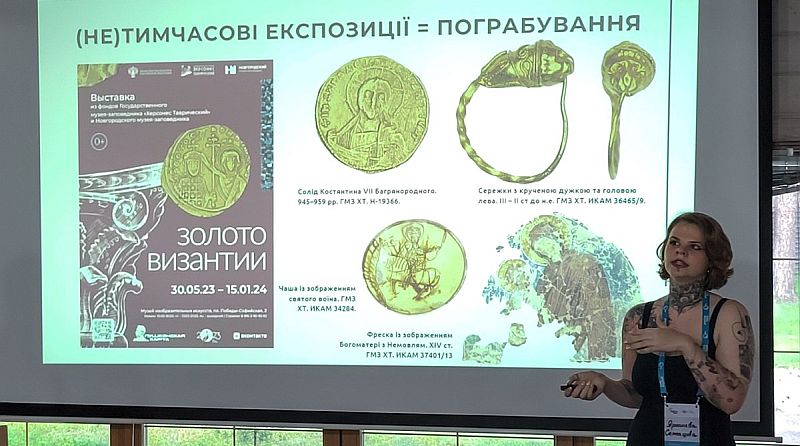
— For this exhibition, 55 fragments of ceramics dated to the 7th–6th centuries BC were taken from the Kerch Museum, excavated in 2014. After Nizhny Novgorod, the exhibition will tour other cities. Will the artifacts be returned? I don’t know. Perhaps it will be like the 2023 exhibition “Byzantine Gold,” which featured more than a hundred items from the funds of “Chersonesus Taurica.” Publications indicated how it gradually transformed from temporary to permanent, — the analyst tells.
— We monitor these things. But at some point, the threads are lost, and naturally, no one reports on the return of the exhibits. Therefore, calculating the losses is very difficult, although we record monthly how these valuables disappear from our museums.
This year, for instance, Moscow plans to hold an off-site exhibition of valuables from the funds of Luhansk museums for the day of the “reunification of Donbas and Novorossiya with Russia.”
There are indeed many such events in Russia and the occupied territories. They exhibit not only items from Crimea but also from Ukrainian museums looted after the full-scale invasion.
— Even if these exhibitions are neutral, without using clear formulations about the “greatness” of the Russian state, they somehow seem to confirm Russia’s right to display these items. Although this is not the case, — says Oksana Lifantiy.
Through exhibitions, Russia not only legitimizes plundering but also erases the geographical ties of the found artifacts. This is vividly traced in the activities of the Hermitage, the archaeologist explains. During the Soviet Union, they still mentioned the Ukrainian SSR as the place the item was found. In the 1990s, mentions of Ukraine as the country of origin of the artifacts were in catalogs, but subtly. Since the early 2000s, the word “Ukraine” simply disappeared. Instead, vague geographical names appeared, like: Dnieper Region, Northern Black Sea Coast.
A bright example is the Hermitage exhibition Scythians: Warriors of Ancient Siberia at the British Museum in 2017. It featured items from the territory of Ukraine, taken to Russia during imperial times, without indicating where they were found.
— And this is a deliberate policy to blur the understanding of where objects originate. When I mentioned this to my colleagues, they said I was just being picky and asking for too much. But this is museum ethics. Every time an object is mentioned, its exact origin and current geographical boundaries should be specified.
Outside the Zone
Since excavations in Crimea and Luhansk are inaccessible to Serhiy Telizhenko, he has been digging in Mykolaiv, Ivano-Frankivsk, Rivne regions, Bilhorod-Dnistrovskyi, the Arabat Spit, and even near the Belarusian border, in peat bogs. He jokes that he has had to become omnivorous.
— But this doesn’t mean we no longer have research on Crimea, Luhansk, or Donetsk. Scientists conduct it using the materials available in the collections. We extract the maximum from them, — says Serhiy Telizhenko.
For instance, the Luhansk and Donetsk themes are currently maintained, among other things, thanks to the powerful anthropological collection of the Institute of Archaeology of the NAS of Ukraine and Taras Shevchenko National University of Kyiv. Scientists study how the Catacomb culture, tribes of the Middle Bronze Age, lived. They excavated a dromos (a vertical path) leading to underground rooms or catacombs where they buried the dead. Hence the name — Catacomb culture. Or there is the global project Millways, initiated by the Lithuanian University, which explores how and when millet traveled from China to Europe. By analyzing dental stones or conducting isotopic analysis of the bones of people from the Bronze or Early Iron Age, it is possible to establish with an accuracy of up to a hundred years when millet spread across modern-day Ukraine, which played a transit role.
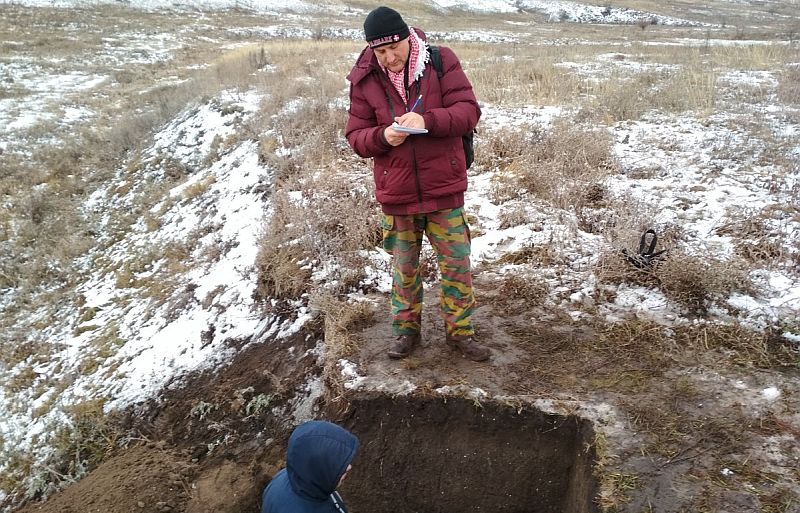
— But the truth is, we really lack the data that could be found in the currently occupied territories of Luhansk and Donetsk. We have materials from the Timber-Grave culture, Catacomb culture, and Yamna culture from there, but they were mostly researched in the 1970s, sometimes in the 1990s. But there are very few recent ones, — explains Serhiy Telizhenko.
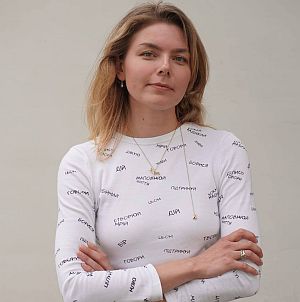
While Ukrainian scientists are detached from archaeological sites and museum collections, Russians are actively publishing research based on finds from occupied territories—not only those they excavated themselves but also those found before them, which they acquired along with museum funds. They are doing this successfully, sometimes even in highly cited European journals, acknowledges Oksana Lifanthiy. After all, in the scientific community, you can still hear that science is beyond politics.
Meanwhile, Ukrainian scientists studying, for example, antiquity, after submitting articles to a European journal, may receive a review comment: “Why not include examples of new finds from Crimea? They are relevant.” Or they plan to attend an international conference and discover that there are Russians on the editorial board.
— Then they write to the organizers that these people are violating the law—researching in Crimea, while Ukrainians are not allowed to participate in such events, — says Oksana Lifanthiy. — Our Academy of Sciences and many other scientific institutions have a direct ban on this. In response, they receive a dismissal, saying the colleagues are respected, they are against the war. That is, to defend your dissertation, you have to participate in international conferences, you have to be published in journals, but you are obliged to choose events where not a single Russian is among the organizers.
On the question of why Poland dared to detain Oleksandr Butyagin, who had previously freely traveled across European countries, she has no exact answer. She hopes it signals that the Polish archaeological community has decided not to tolerate such things.
— In the fall of 2022, I was planning to attend a major conference in Greece that was postponed due to COVID. There were many participants from Russia announced at the event, — recalls the scientist. — I wrote an open letter to the organizers asking them not to allow them at the event. To which I received a response in the spirit of “science is beyond politics, Russians are our friends, and if you don’t want to, don’t come.” At that time, it was Polish colleagues who decided to ignore the event due to the presence of Russian archaeologists.
Oksana decided to attend the conference anyway and raise the issue of illegal Russian excavations in occupied territories. Then the participants agreed that there would be no materials in the conference proceedings based on finds from there.
— When I asked colleagues from other countries why these issues aren’t raised without Ukrainians, they told me: “These are your territories and your responsibility, not ours. But when you raise them, we support.” I know for sure that if Ukraine doesn’t systematically speak up, it will be forgotten. It’s primarily our task to shout out wherever we can that this is not normal. Similar to what is done every time someone tries to sneak Russian teams into sports competitions: raise an outcry, declare your position that it’s not okay.
If you shout, they will hear, agrees Serhiy Telizhenko, who is subscribed to major European archaeological groups on social networks and comments on these issues when they arise. Along with other colleagues, he is part of the working group at the General Prosecutor’s Office on cultural heritage protection issues.
— The process is ongoing; the sanctions list is slowly expanding. Although it could be cleaned up a bit, at least remove those who have already passed away. Moreover, for some reason, the prosecutor’s office is not very interested in Luhansk and Donetsk regions, — he says. — Perhaps due to the large amount of work related to the Melitopol Museum, with the Scythian gold, Crimea, Kherson, they simply haven’t gotten to the rest yet.
But the problem is that cultural heritage still remains a field for the few, says Denys Yashny. Not only in specialized executive bodies but in every law enforcement structure, the number of people dealing with crimes against it can be counted on the fingers of one hand.
On display: Illegal excavations on the territory of the historical and archaeological museum-reserve “Chersonesus Taurica” in annexed Crimea. Photo: facebook/Union of Archaeologists of Ukraine
