
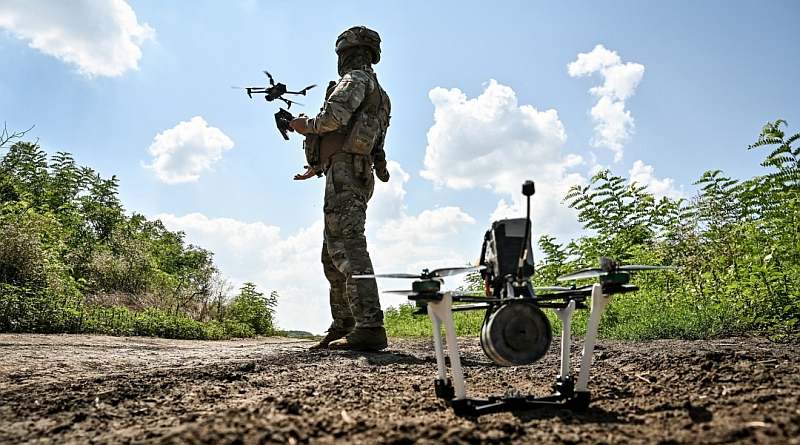

I see interesting theses in the media. Like everything, the Russian offensive has exhausted itself, almost parity on the front, all that.
Honestly, I do not share such victorious reports.
Firstly, because the Russians are now accumulating new forces, “Rubicon” has not gone away, drone units in this offensive campaign will be more scalable than a year ago.
Secondly, this is already from experience, and I am still a veteran of the 59th, and every year, with every commander, the same situation: damn, the foliage has blossomed, we need to change the systematic work of reconnaissance-strike units, and we were as ready for this as Kyiv utility workers were for snow. Although no, under Sukharevsky, it wasn’t as critical, but only because in those times there wasn’t such a proliferation of drones among the Russians, and instead of infiltration tactics, there were armored assaults; anyway, there were slightly different challenges. But still, such a trend existed, and this is still the 59th with its vast experience in the harshest conditions. But every new year is more difficult than the previous one, so a lot needs to be invented on-site and timely, hence the situation.
If you take the general statistics on territorial losses in 2024-2026, you can see a statistically strong failure in some directions when the tree crowns covered the landings, and the enemy’s logistics began to pass under dense canopies, where even a Mavic can’t always detect enemies in time. In the spring, you can more effectively build drone positions in the plantations and install tactical radars in the shade of trees. Also, the pressure on our logistics increases, the weather allows flying further and more, bombarding both near and far logistics with various stuff. This all affects the tactical situation on the battlefield.
Therefore, acknowledging that we managed to level the situation today is correct. But spreading this thesis over the next 2-3 months is still premature.
A lot of work lies ahead.
Photo: Dmytro Smoliyenko/Ukrinform
