
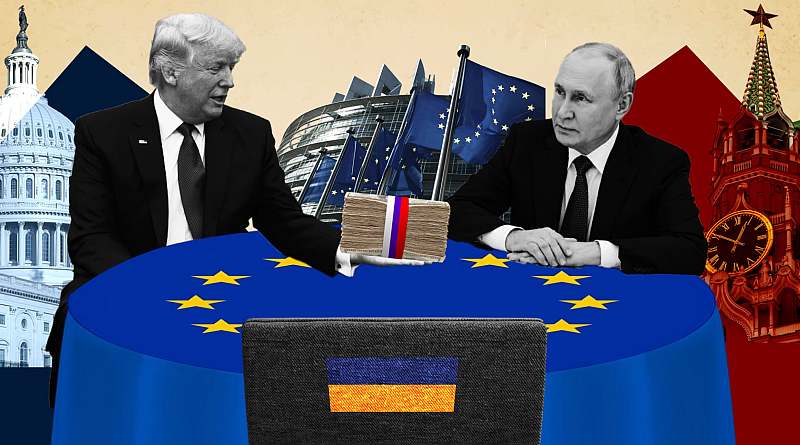

Information regarding the current losses of the Russian Federation due to sanctions as of 15.10.2026.
1. On the night of October 15, the Ukrainian Defense Forces struck the “Borisoglebsk” military airfield in Russia’s Voronezh region.
– Following the attack, a large fire broke out at the airfield. Local channels reported explosions and the operation of Russian air defense.
– The General Staff of the Armed Forces of Ukraine confirmed the airfield hit. According to their data, a stockpile of guided aerial bombs, a training-combat aircraft, and possibly other aircraft were damaged.
2. A fire broke out at the “Rosneft” refinery in Ryazan after a drone attack.
– On the night of October 15, a fire broke out at the oil refinery in Ryazan, Russia. Local residents reported explosions and a drone attack.
– The Ryazan refinery belongs to “Rosneft” and has a processing capacity of about 17 million tons of oil per year. The enterprise produces gasoline, diesel and aviation fuel, fuel oil, and other petroleum products, supplying, in particular, the Moscow region.
– This is at least the fourth episode of attacks on the enterprise in 2026, considering the current strike. The plant was previously attacked in May and July, as well as on the night of September 6. After the September attack, two primary oil processing units — CDU-6 and CDU-4 — were halted. It was reported then that repairs could take several weeks.
3. Russian Urals oil is losing competitiveness in Asia due to growing discounts and transportation costs.
– Russian Urals oil is facing increased competition in the Asian market due to the resumption of supplies from the Persian Gulf countries. According to Argus, from October 5-9, the discount on Urals compared to Brent in Baltic ports increased by $1.45 — up to $20.85 per barrel.
– Meanwhile, the price of Russian oil in Primorsk and Ust-Luga rose to $112.24 per barrel due to the overall increase in oil prices on the global market. The export of Russian oil is further complicated by a sharp rise in sea transport costs.
– The delivery of one barrel from Primorsk to India costs $27.89, and to China — $32.07. These expenses reduce the profitability of supplies and complicate competition for Asian buyers.
– Meanwhile, oil exports from the Persian Gulf countries increased in September by 4.4 million barrels per day — up to 13.9 million barrels.
– It is expected that in October, supplies from the Middle East may return to pre-war levels. This will intensify competition in the Asian market and may force Russian exporters to increase discounts to retain buyers.
4. Russia’s oil export revenues rose to $17.67 billion despite reduced supplies.
– In September 2026, Russia received $17.67 billion from the export of oil and petroleum products — $3.58 billion more than in August. At the same time, physical export volumes continued to decline. This is evidenced by the data of the International Energy Agency (IEA).
– The total export of Russian oil and petroleum products amounted to 6.52 million barrels per day — 970,000 barrels per day less than in September 2025. Of this volume, crude oil accounted for 5.28 million barrels per day, while petroleum products accounted for 1.24 million barrels.
– The export of petroleum products saw the largest decline: over the year, it fell by 1.1 million barrels per day. Therefore, the increase in revenues in September does not indicate a recovery in physical supply volumes.
– The Russian oil industry remains vulnerable to further export reductions, and the monthly revenue increase alone does not resolve issues with the sale of petroleum products.
5. Investment activities of Russian businesses are declining at record rates since 2009 due to a lack of funds and demand.
– In the first quarter of 2026, investments in fixed capital decreased by 14.3% year-on-year — this is the largest decline since 2009. In the third quarter, the balance of business evaluations of the current situation became negative again, according to a survey by the Bank of Russia, in which 11,500 companies participated.
– According to the forecast of the Ministry of Economic Development of Russia, investments were expected to decrease by 5.4% by the end of 2026. In the first half of the year, the decline already amounted to 9.9%. The main obstacles to investments were cited by enterprises as a lack of own funds — 26.7% of respondents, uncertainty in the economic situation — 25.8%, and insufficient demand — 20.8%.
– The reduction in financial capabilities exacerbates the decline in profits: from January to July, Russian companies earned 13 trillion rubles — 15.7% less than in the same period last year. This is the worst result since 2020, and every third enterprise was unprofitable.
– At the same time, since 2025, Russia has increased the profit tax, which further reduces the funds companies can allocate for development. Own resources remain the main source of investment financing and account for more than half of fixed capital investments.
– Additional restraining factors include unpredictable changes in tax policy, increased state regulation, risks of asset loss and criminal prosecution of entrepreneurs, as well as high military budget expenditures.
– In the face of uncertainty, businesses are postponing investments as they cannot predict future working conditions.
6. Trump proposed transferring part of the frozen Russian assets under U.S. control.
– The administration of U.S. President Donald Trump proposed that European countries unblock part of the Russian assets frozen after the full-scale invasion of Ukraine and transfer them under the control of a structure managed by Washington.
– The initiative was voiced by Trump’s special envoys Steve Witkoff and Jared Kushner during negotiations in Miami on October 9. Representatives from Ukraine, France, Germany, the United Kingdom, the EU, and NATO participated in the meeting. The use of frozen assets was discussed as part of a possible comprehensive peace settlement.
– European officials rejected the proposal, stating that they oppose transferring control of the assets to any other party, as well as returning any portion of them to Moscow. The American delegation was made aware that such a scenario is unacceptable.
– Washington’s initiative caused concern in European capitals and Kyiv, as it indicates differences between the U.S. and European approaches to the use of Russian assets and pressure on the Kremlin. The fate of these assets remains one of the key issues in discussions on post-war settlement and compensation for Ukraine’s damages.
7. The U.S. may ease sanctions on “shadow fleet” ships transporting Russian oil.
– The administration of U.S. President Donald Trump is considering easing sanctions on tankers of the “shadow fleet” that transport oil and oil products from Russia, Iran, and Venezuela.
– It involves allowing the use of sanctioned vessels for transporting oil and oil products not subject to American restrictions. The aim is to increase the number of tankers for exporting raw materials from the Persian Gulf and reduce the cost of maritime transport.
– Companies would need to obtain special permits from the U.S. Department of the Treasury to use such vessels. This step may add a small number of tankers for voyages through the Strait of Hormuz but is unlikely to cause a general reduction in freight rates. Insurers must continue to comply with EU and UK sanction rules.
– The U.S. Department of Energy assured that possible easing of restrictions will not allow Russia to transport oil and oil products circumventing sanctions.
– Meanwhile, involving additional tankers in global market transport may indirectly affect the availability of vessels and the cost of transporting Russian oil.
8. Bank of America was fined $1.21 billion for violating sanctions and financial control rules.
– The U.S. Department of the Treasury announced fines exceeding $1.21 billion for Bank of America, the country’s second-largest bank. The financial institution failed to timely report suspicious transactions totaling more than $5 billion, some of which might have been linked to national security risks and illegal financing, including activities of Chinese money laundering networks.
– According to the U.S. Department of the Treasury, the bank agreed to settle potential civil liability for 475 alleged sanctions violations. Bank of America conducted transactions worth millions of dollars contrary to U.S. restrictions against Russia, Belarus, Iran, Myanmar, as well as sanctions associated with Somalia and terrorism.
– The Department of the Treasury released the full text of the agreement with FinCEN, the department’s division that combats financial crimes. The case involves both the failure to meet requirements for reporting suspicious transactions and the processing of payments that might have violated the U.S. sanctions regime.
Collage: Focus
