
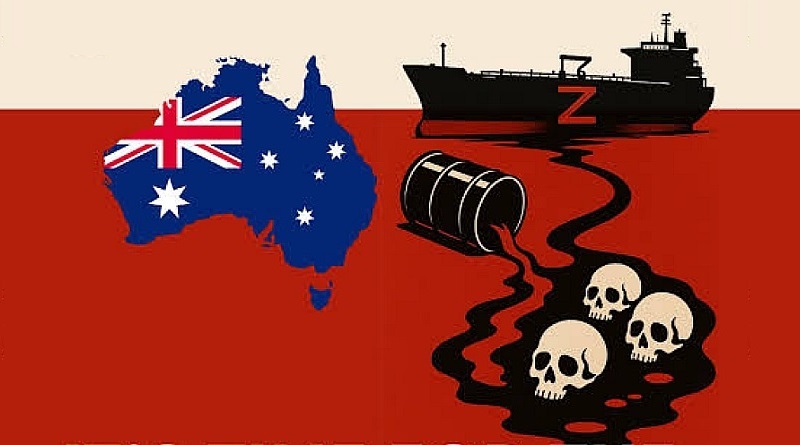

Information on current losses for the Russian Federation due to sanctions as of 10/11/2026.
1. Ukrainian drones halted the operation of Yandex’s third data center in Russia.
– On the night of October 11, Ukrainian drones attacked Yandex’s data center in Vladimir, Russia. The company confirmed damage to the infrastructure and a complete shutdown of the facility.
– The data center has a capacity of 50 MW and is designed for 2880 IT racks. After the attack, there was a massive disruption in Yandex’s services. Users reported problems with the voice assistant “Alisa,” “Yandex Music,” “Yandex Telemost,” and the “Yandex Home” service.
– The issues also affected the Yandex Cloud platform: power outages were recorded in the ru-central1-a availability zone, and more than 80 services and components of the platform became unavailable. These included computing power, network services, databases, storage, and artificial intelligence tools, including the YandexGPT API.
– This is the third Yandex data center to be hit in a few days. On the night of October 8, drones damaged the facility in Sasovo, Ryazan region, completely halting its operation. On October 9, the company’s data center in Kaluga was attacked, where part of the infrastructure also failed.
2. A Republican in the U.S. Congress is trying to block Trump’s deal with Russia on diesel supply.
– Congressman Brian Fitzpatrick from Pennsylvania is initiating a bill to ban purchases of Russian oil and oil products in the U.S. He is trying to block Donald Trump’s agreement with Putin on the supply of Russian diesel fuel.
– Fitzpatrick, co-chair of the Ukraine Caucus in the House of Representatives, stated he would promote the “Ronald Reagan Peace Through Strength Act.” To bring it to a vote without the support of the House leadership, the congressman plans to use a special procedure — a discharge petition.
– This requires gathering signatures from at least 218 of the 435 House members. Republican Don Bacon has already agreed to support the initiative. Fitzpatrick believes easing restrictions would give Russia additional revenue to continue the war against Ukraine.
– The bill’s prospects are uncertain. Congress will return to voting only after the midterm elections on November 3, and the current term ends in January. Even if the House supports the document, it must be approved by the Senate, after which Trump could veto it.
3. Australia refused Russian fuel despite possible U.S. sanction relief.
– Australia will not purchase Russian fuel even if U.S. sanctions against Russia are eased. Canberra confirmed the ban on such purchases to prevent Moscow from receiving additional funds to finance the war against Ukraine.
– “Australia does not need Russian fuel. We do not want Putin to benefit from it. The actions of the U.S. are their business, but we will not change our approach,” said Australia’s Energy Minister Chris Bowen. He stated that the current gasoline reserves in the country are sufficient for approximately 43 days, and diesel for 31 days.
– Despite this, the Australian authorities do not consider purchasing Russian fuel as a way to replenish reserves.
– Canberra’s decision means that even a potential easing of restrictions by Washington would not guarantee Russia’s return to the Australian fuel market.
4. Germany will not change its sanctions policy against Russia despite Trump’s decision on diesel.
– Germany will continue to adhere to sanctions against Russia and, together with European partners, work on new restrictions, despite the Donald Trump administration’s decision to temporarily ease sanctions for the supply of Russian diesel fuel. This was stated by German government spokesperson Stefan Cornelius.
– According to him, Berlin has taken note of the U.S. decision, but will not change its stance. Germany will continue to support Ukraine and maintain diplomatic efforts to achieve peace.
– Trump stated that Russia agreed to supply diesel fuel to world markets, and Washington temporarily eased the restrictions accordingly to curb price increases. Diesel is crucial for agriculture, heating, and freight transport, and its rising prices pose additional political risks for Republicans ahead of the U.S. Congressional elections on November 3.
– German Chancellor Friedrich Merz, after visiting Kyiv, also confirmed that Berlin will not cut support for Ukraine. Germany remains the largest European donor of aid to Ukraine.
5. The Netherlands is preparing a law to detain Russian shadow fleet vessels.
– The Dutch government has proposed legislative changes that will allow more effective detention of vessels of the Russian shadow fleet used to circumvent international sanctions.
– The initiative provides for the possibility of intercepting vessels that are in the country’s exclusive economic zone under false flags or without proper registration. Upon passing the bill, such vessels can be forcibly escorted to anchorage or port for inspection.
– This is expected to simplify tackling tankers that conceal their affiliation and are used to transport Russian oil circumventing sanctions. European countries are stepping up security measures due to increasing threats from Russia.
– Passing the Dutch bill could enhance control over the transportation of Russian oil and complicate the operations of the shadow fleet, which helps Moscow maintain export revenues despite international restrictions.
6. The EU paid €7.9 billion for Russian Arctic LNG in the first nine months of 2026.
– From January to September 2026, European countries paid about €7.88 billion for liquefied natural gas from the Russian “Yamal” project.
– According to the environmental organization Urgewald, citing the analytical company Kpler, a record 12.18 million tons of Russian Arctic LNG arrived at European ports during this period, 9.5% more than in the same period last year.
– EU ports accounted for 85% of all recorded shipments from “Yamal.” In September, France received the most gas: Dunkirk and Montoir ports accepted a total of about 572 thousand tons. The Netherlands imported approximately 146 thousand tons, and Portugal — 74 thousand tons.
– The volumes of shipments indicate that European countries continue to purchase significant amounts of Russian gas, despite Brussels’ declared course to abandon energy resources from Russia. This also raises questions about the effectiveness of restrictions on LNG imports.
– The ban on imports under short-term contracts came into effect on April 25, 2026. However, in September, 792.4 thousand tons of Russian Arctic LNG arrived in Europe — slightly more than in the same month last year.
– The EU is set to implement a full ban on the import of Russian LNG under long-term contracts from January 1, 2027.
